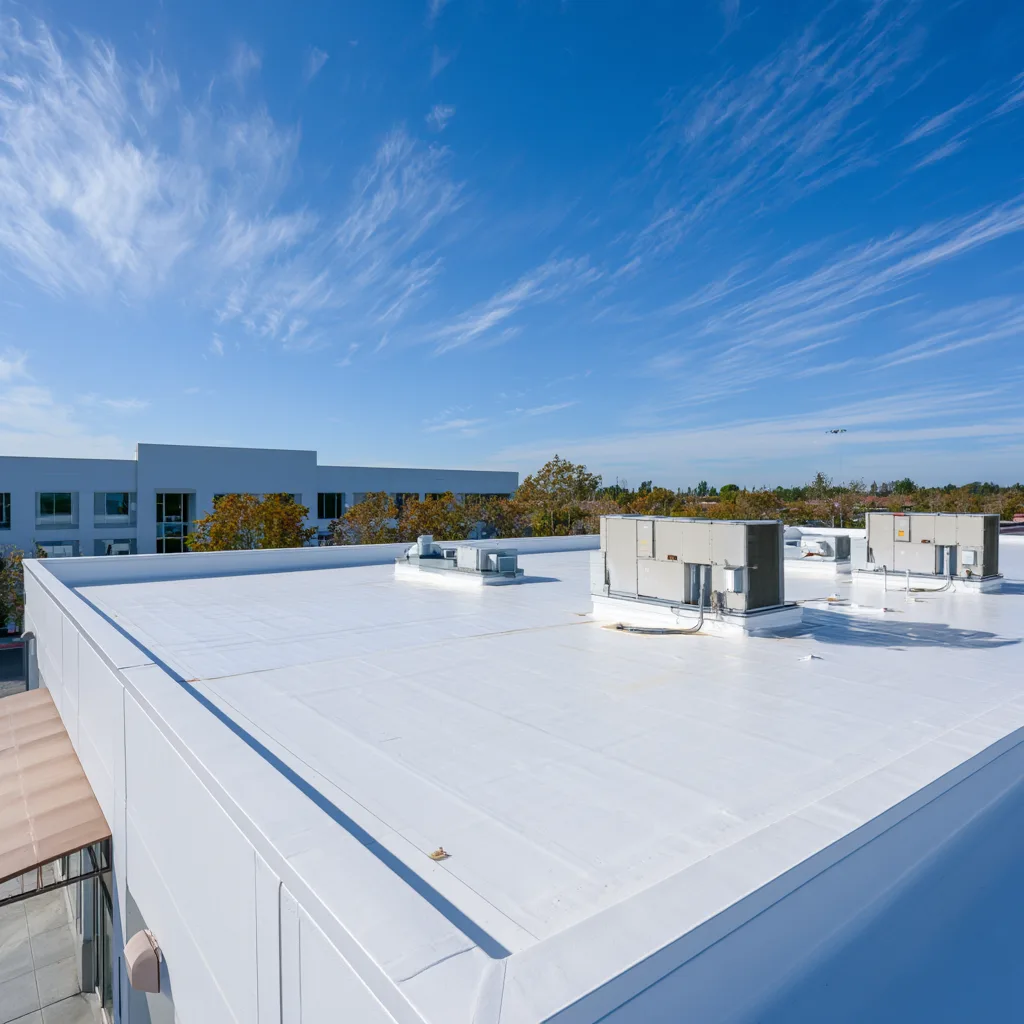
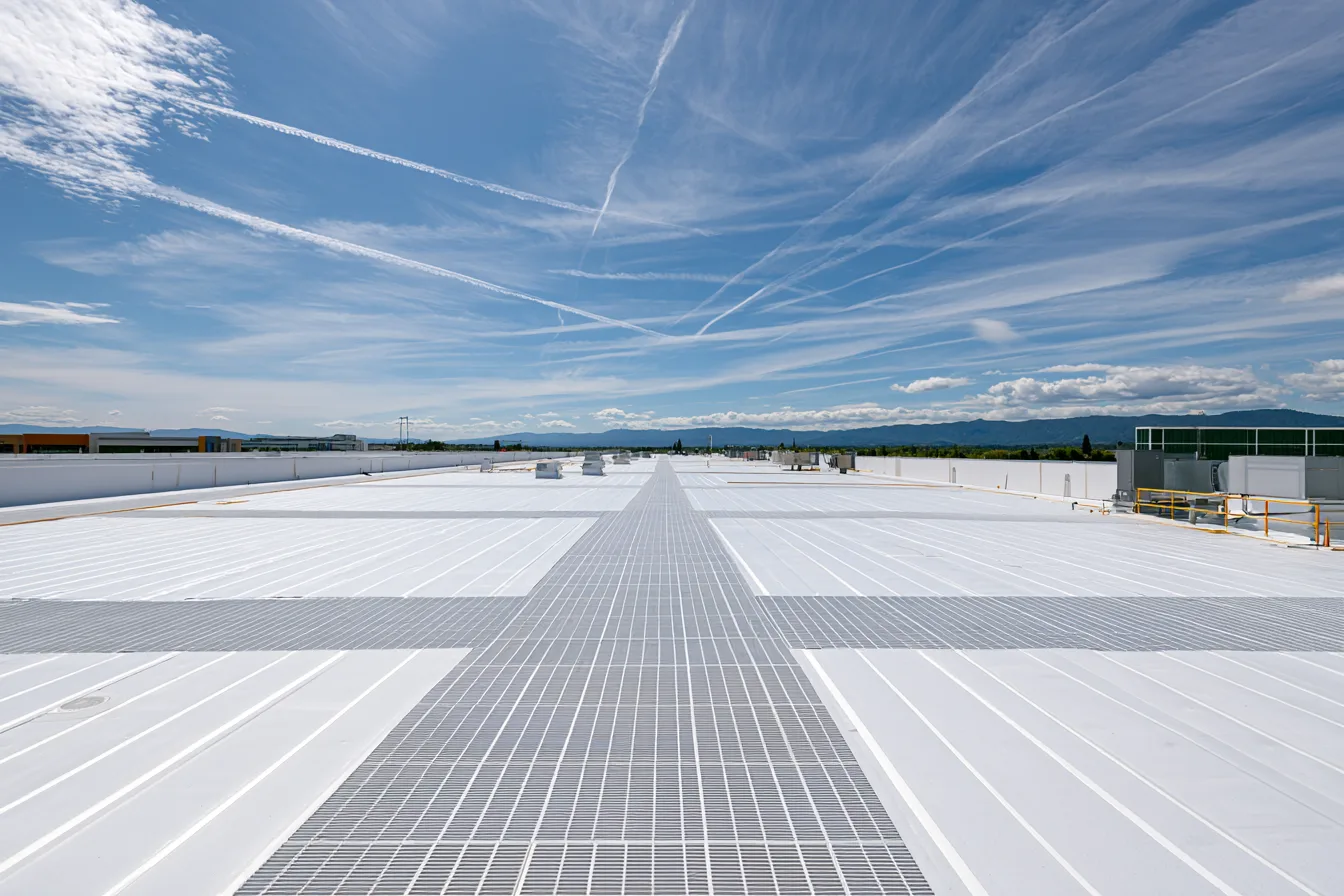
A rooftop unit may need service while the roof is otherwise sound. Getting people and tools to that unit, altering a curb or adding a penetration can still affect the membrane. The roof should be part of the equipment plan.
Start with the route to the equipment
A service visit creates traffic beyond the footprint of the unit. Tools, replacement parts and removed components all travel across the roof. A dropped tool or a sharp piece dragged over a membrane can create a local defect independently of the covering's age.
Appropriate walk protection and access routes account for a roof that has to be used. The selected system determines which protection and repair materials are compatible. A random mat or improvised patch should not be assumed to suit every membrane.
Blue Springs Roofing Co helps building owners connect those operating needs to the actual roof. Explore commercial roofing
The curb and flashing are roof components
An equipment curb raises the opening above the roof surface, and flashing connects that curb to the membrane. Corners, terminations and the base of the curb need the system's intended details. Moving equipment or modifying the opening can disturb that connection.
A new unit can also change the size, support and service needs of the equipment. Structural support, mechanical work and roofing have different responsibilities. They need coordination at the same opening rather than an assumption that roof sealant will finish every change.
Keep drainage in the work area
Materials and debris left near an outlet can restrict flow. Added equipment or a modified support arrangement can also affect the available drainage path. A roof that has a clear outlet still needs water to reach it.
Persistent standing water deserves a cause-based assessment. Removing debris is different from correcting a low area, outlet level or structural condition. A new coating does not automatically resolve those questions.
Match substances and repairs to the membrane
Oils, grease and other substances discharged onto a roof can affect some materials. Building use matters: exhaust and spills are part of the environment the roof has to tolerate. The specific membrane and manufacturer guidance determine compatibility.
Repair methods differ too. TPO and EPDM can look similar at a distance while requiring different connection methods and materials. Identify the existing assembly before treating a readily available patch as a suitable repair.
If a leak appears after the work
The timing is useful background, but it does not prove which part failed. A puncture, disturbed curb detail, blocked outlet or an unrelated roof defect can all need consideration. Tell the roofer about the equipment work and where water is appearing.
We examine the roof concern and the surrounding connections. A compatible local repair can keep a sound roof useful; wet insulation or deterioration below the surface can widen the scope.
The flat-roof repair service explains those work boundaries. Understand flat roof repair