
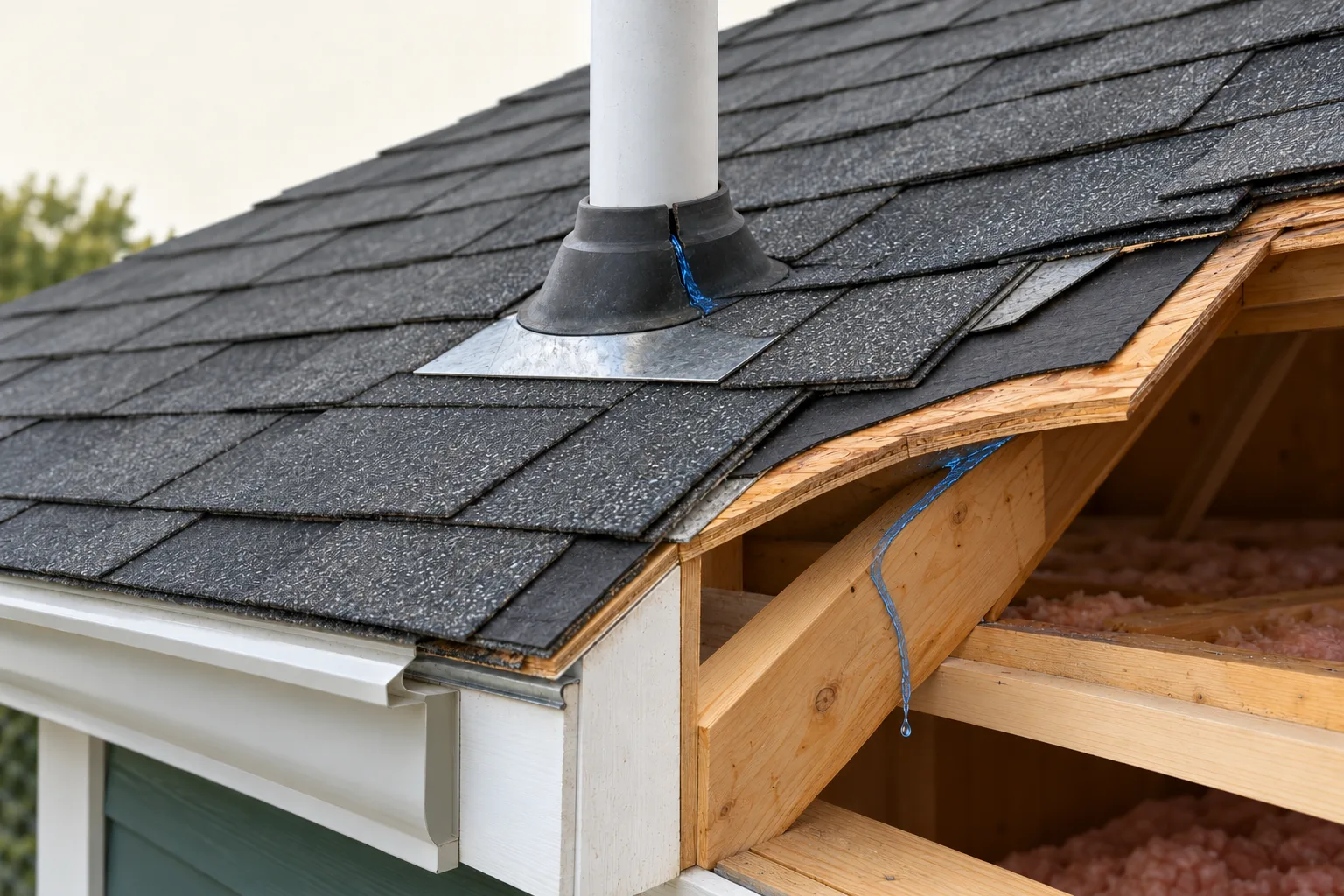
The rain returns, and the same mark on the ceiling gets wet again. That does not always mean the new patch failed. It can mean the roof opening was elsewhere, the repair stopped short of damaged layers, or another connection is still admitting water.
The stain shows where water arrived
Water does not have to fall straight from a shingle opening into the room below. It can run beneath the covering, along the underside of decking or beside framing before finding a place to drip. That makes the indoor stain useful evidence, but not a roof repair location by itself.
A patch placed over the roof directly above the stain can miss the entry point. The leak can continue while the new surface looks undisturbed. We follow the likely route and examine the relevant pipes, walls, valleys and repair edges.
At Blue Springs Roofing Co, a returning leak is a reason to revisit the roof question before assuming the whole roof needs replacing. Explore roof leak repair
A roof repair needs more than a covered gap
Consider a vent boot with a split collar around the pipe. The collar, metal base and adjoining roof layers work together to direct rain around the opening. Replacing only the surface material near the indoor drip leaves the split beside the pipe in place.
Flashing at a wall has a similar need for integration. Its overlaps carry water back onto the roof. Sealing the visible face can leave water entering behind the metal or the wall-side connection. The useful repair restores the intended path rather than covering whichever edge is easiest to reach.
The material around the patch sets the boundary
A local repair has to tie into the roof it keeps. The adjoining shingles must lift without breaking, the replacement material must fit and the deck must provide sound support. New material cannot make softened wood hold fasteners properly.
That can turn a small visible defect into a larger repair. Opening the covering can expose damaged underlayment or wood, and brittle shingles can widen the area needed for a sound connection. It is the condition that widens the work, rather than the size of the stain alone.
A repeat leak is a question, not a whole-roof verdict
Several possible causes can end at the same indoor spot. The old repair could be incomplete; a different opening could now be contributing; or the dampness could involve condensation rather than rain entry. Those possibilities need assessment instead of another assumption.
If surrounding roofing remains sound, a focused repair can still make sense. When deterioration spreads across a slope or repeated work leaves too little suitable material, replacement belongs beside the repair in the discussion.
Our scope explorer explains how those findings change the options. Explore repair versus replacement
What to share when you ask for help
Tell us where the water appears, roughly when it started and what earlier work you already know about. You do not need to reconstruct every roof record or climb up to inspect a patch.
If water is coming in now, say so when you call. Keep away from sagging ceilings, wet electrical equipment and unsafe areas. A free inspection gives the repair decision its roof-specific starting point.